

Custom Textile Printing & Private Label Clothing India
The Manufacturing Partner Your Brand Has Been Looking For
The global fashion industry runs on relationships — and the most important relationship any brand can build is with the manufacturer behind its products. In a world where consumers demand more transparency, more sustainability, and more originality, the choice of production partner defines not just what you sell, but what your brand stands for.
India has long been the engine room of global textile production. Skilled artisans, a deep-rooted fabric heritage, globally competitive pricing, and a rapidly modernising manufacturing infrastructure make India the world’s most strategic destination for brands seeking quality at scale. Within this landscape, custom textile printing services India providers have emerged as indispensable partners for labels of every size — from independent designers launching their first capsule collection to global retailers sourcing across multiple seasons and categories.
The Hemploom was built to serve exactly this demand. As a full-spectrum private label garment manufacturer India brands trust for consistent, sustainable, and export-ready output, The Hemploom combines artisan textile tradition with modern production precision — delivering products that carry your brand’s name and your brand’s values with equal confidence.
This page walks you through the complete picture: what custom textile printing services in India include, why private label garment manufacturing is the strategic choice for growing brands, what materials and techniques The Hemploom brings to every project, and how to begin a production partnership that is built to last.
Section 1: Understanding Custom Textile Printing Services in India
Custom textile printing is more than putting a logo on a T-shirt. It is the process of translating brand identity into physical fabric — through colour, pattern, placement, technique, and material — in a way that is repeatable, scalable, and commercially viable.
India’s position as a global hub for custom textile printing services is built on three core advantages: a legacy of textile artistry that spans centuries, a technical workforce trained in both traditional and modern printing methods, and a supply chain infrastructure that makes high-quality production accessible at competitive price points.
Whether you are developing a resort wear line that leans on hand block printing traditions, a streetwear collection that demands photographic-quality all-over prints, or a corporate merchandise programme that needs clean, consistent logo application across thousands of units — custom textile printing services India facilities are equipped to handle every brief with precision.
The Core Printing Methods Available
Screen Printing remains one of the most widely used and cost-effective methods for bulk production. Using mesh stencils and speciality inks, screen printing delivers sharp, vibrant prints on T-shirts, hoodies, tote bags, and a wide range of garment categories. It is most efficient for designs with defined colour separation and works exceptionally well for orders requiring consistent, repeatable output at high volumes.
Direct-to-Garment (DTG) Printing is the method of choice for intricate, multi-colour artwork — particularly for lower quantities where screen printing setup costs would be disproportionate. DTG deposits water-based inks directly into the fibre structure of the garment, producing soft, photographic-quality prints with no minimum colour limitations. It is ideal for limited-edition drops, artist collaborations, and on-demand fulfilment models.
All-Over Digital Printing allows brands to print edge-to-edge, full-panel designs across an entire garment — creating immersive visual statements that are impossible with traditional placement printing. This method is particularly popular for resort wear, activewear, and statement fashion collections where the fabric itself is part of the narrative.
Hand Block Printing connects modern fashion with India’s most ancient textile tradition. Each block-printed piece carries the natural variation and handmade character that machine printing cannot replicate — making it the ideal choice for brands building an identity around artisan authenticity, heritage craft, and slow fashion values.
Embroidery and Appliqué complete the finishing picture — adding dimension, texture, and a premium quality signal to any garment category. From tonal chest logos to elaborate back-panel embroidery, these techniques elevate product positioning and reinforce brand equity at every touchpoint.
Section 2: Why Private Label Garment Manufacturing Is the Smartest Brand Strategy
Private label manufacturing is the model that powers the world’s most successful fashion brands — and it is more accessible than most people realise. As a private label garment manufacturer India trusts for white label production across categories, the fundamental value proposition is simple: you bring the brand vision, the manufacturing partner brings the expertise, infrastructure, and materials.
White label clothing production means every garment that leaves the production floor carries your name, your label, your sizing system, and your brand positioning — manufactured by a skilled partner working entirely on your behalf, invisible to your end customer.
This model delivers advantages that in-house manufacturing simply cannot match at an early or mid-scale stage:
No Capital Lock-In: Building a factory requires enormous fixed investment. Private label manufacturing converts those fixed costs into variable costs — you pay per unit, per order, per season. Your capital stays in the business, not in bricks and machines.
Access to Established Expertise: A production partner with years of experience brings pattern libraries, established supplier relationships, skilled quality control teams, and tested production systems. You benefit from all of this from day one of your partnership, without the years it takes to build it internally.
Flexible Scaling: As your brand grows, your production volumes grow with it. A capable private label garment manufacturer India partner scales production seamlessly — from a 200-piece launch order to a 15,000-piece retail season — without compromising consistency, quality, or timeline.
Speed to Market: With established production infrastructure already in place, development and delivery timelines are dramatically compressed compared to building internal manufacturing capacity. New styles move from approved design to finished product in weeks, not quarters.
Sustainability at the Source: Working with a responsible manufacturing partner means your sustainability credentials are built into the product from the beginning — through material selection, production processes, and supply chain transparency — rather than added as a marketing layer after the fact.
Section 3: The Hemploom — Where Every Thread Tells a Brand Story
The Hemploom is not a generic job worker. It is a textile partner — built around the philosophy that the best products come from collaboration, not just instruction.
As a custom textile printing services India provider with a deep commitment to sustainable production, The Hemploom brings together India’s finest natural and plant-based fibres, a full suite of printing and finishing techniques, and a client-first approach to development and communication. The result is a manufacturing experience that feels less like outsourcing and more like building with an expert in-house team.
The Hemploom serves clients ranging from independent designers and sustainable fashion startups to international wholesale buyers and established retail brands — across India, Europe, North America, Australia, and beyond.
What makes The Hemploom the right partner is not any single capability — it is the integration of all of them. Fabric sourcing, sample development, bulk production, custom branding, quality control, and export-ready packaging all happen under one roof, coordinated by a single team accountable to your timeline and your standards.
Section 4: Natural and Plant-Based Fabric — The Foundation of Responsible Manufacturing
The materials a garment is made from are the most honest expression of what a brand believes. Certifications, marketing language, and sustainability reports matter — but the fibres in the fabric tell the real story.
As a committed natural fabric manufacturer, The Hemploom has built its entire fabric library around materials that are traceable, responsible, and performance-ready. Every fibre available through The Hemploom’s sourcing network has been selected for its environmental credentials, its suitability for custom printing and garment construction, and its end-product quality.
Hemp and Hemp Blends are at the heart of The Hemploom’s identity as a plant based fabric supplier. Hemp is arguably the most sustainable textile fibre in commercial production today. It grows rapidly without synthetic pesticides, requires dramatically less water than conventional cotton, naturally improves soil health through its root system, and produces a fibre that is simultaneously durable, breathable, UV-resistant, and naturally anti-bacterial. Hemp fabric softens with every wash, making it a pleasure to wear and a garment that genuinely improves over time.
GOTS-Certified Organic Cotton remains the most versatile and commercially accessible natural fibre — available in jersey, twill, canvas, ribbed, and interlock constructions for a wide range of garment categories. Certified to the Global Organic Textile Standard, organic cotton from The Hemploom’s sourcing network is grown without synthetic fertilisers or harmful pesticides, processed with non-toxic dyes, and traceable from field to finished garment.
Tencel™ Lyocell is produced through a closed-loop manufacturing process that recovers and reuses over 99% of the solvent used in production — making it one of the most environmentally efficient fibres available at commercial scale. Tencel delivers an exceptionally soft hand-feel, excellent drape, and strong moisture management — ideal for loungewear, basics, and fluid fashion silhouettes.
Bamboo Fabric brings a naturally silky texture with functional moisture-wicking and anti-bacterial properties — making it an outstanding choice for activewear, wellness apparel, and everyday basics. Bamboo grows with remarkable speed and requires no irrigation or pesticides, giving it strong natural credentials alongside its performance qualities.
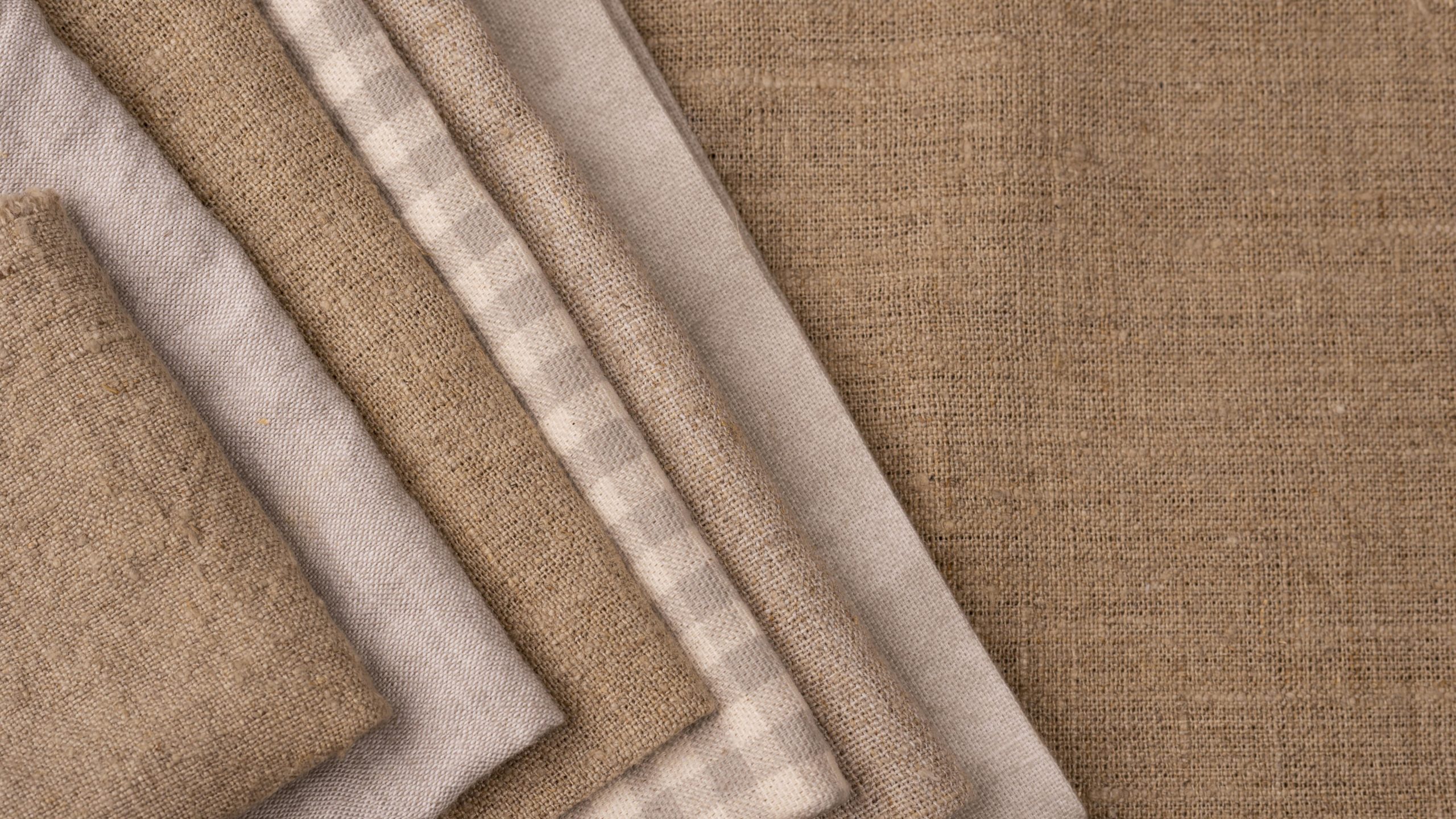
Linen and Linen Blends offer a timeless natural texture that has defined resort, summer, and lifestyle fashion for generations. Linen is highly breathable, naturally temperature-regulating, and becomes more characterful with wear — a fabric that tells a slow fashion story in every thread.
Recycled Polyester (rPET) rounds out the fabric range for brands operating in activewear, outerwear, and performance categories — delivering the technical properties of synthetics while diverting post-consumer plastic waste from landfill and ocean systems.
Section 5: Export-Ready Manufacturing for a Global Marketplace
India’s textile manufacturing sector is one of the most export-experienced industries in the world — and working with a capable export quality textile manufacturer means your product arrives at international destinations fully compliant, correctly labelled, and commercially presentable.
As one of the leading textile manufacturers in India for export, The Hemploom’s production and documentation processes are aligned with the compliance requirements of key international markets. Every export order is supported by accurate fibre content declarations, OEKO-TEX fabric safety assurance, correctly formatted care instruction labels, and pre-shipment quality inspection reports.
Whether your product ships to boutiques in Paris, distribution centres in the United States, retailers in the United Kingdom, or e-commerce fulfilment hubs in Australia — The Hemploom’s export-ready production infrastructure ensures nothing stands between your finished goods and your international customer.
Section 6: Low MOQ Manufacturing — Accessible Production for Every Stage of Brand Growth
One of the most persistent myths in fashion manufacturing is that quality requires enormous volume. Large factories build this belief deliberately — because high minimum order quantities protect their margin and their scheduling efficiency. The cost is paid by the brands that cannot meet those minimums: independent designers, emerging labels, niche market specialists, and brands testing new categories before committing to full production runs.
As a dedicated low MOQ clothing manufacturer, production here is designed around the reality that great products can start small. Low minimum order quantities allow brands to:
- Launch capsule collections without the financial risk of overproduction
- Test new silhouettes, colourways, or fabric options before committing to full-scale runs
- Maintain fresh, rotating product offerings without warehouse-filling inventory commitments
- Build client relationships at a pace that matches genuine brand growth
Low minimums do not mean reduced attention. Every order — regardless of quantity — receives the same sampling rigour, quality inspection process, and labelling precision as a high-volume commercial run. A 150-piece order and a 15,000-piece order both leave the production floor ready to carry your brand.
White label clothing production at low minimums is particularly valuable for brands in early scaling phases — allowing founders to test market response with professionally manufactured, brand-labeled product before investing in large-scale inventory.
Section 7: The Production Journey — From Concept to Carton
Working with The Hemploom is a structured, transparent, and collaborative process:
Stage 1 — Discovery and Brief Share your product vision — silhouette references, fabric preferences, print concepts, label requirements, approximate quantities, and target timelines. The Hemploom’s team evaluates the brief and responds with a detailed production proposal covering material options, technique recommendations, pricing, and lead times.
Stage 2 — Tech Pack and Sample Development For brands working from concept rather than fully developed specifications, The Hemploom’s in-house design team develops technical packs covering construction details, measurement charts, print placements, and fabric specifications. Physical samples are produced and shared for review — with revisions handled transparently until the product is exactly right.
Stage 3 — Pre-Production Approval Once the sample is signed off, production quantities, pricing, and delivery timelines are confirmed. A production schedule is shared so clients have full visibility into every stage of the bulk manufacturing process.
Stage 4 — Bulk Manufacturing Fabric is cut, sewn, printed, and finished in-house. Quality inspections take place at multiple production stages — fabric inspection on arrival, inline quality checks during production, and final inspection before packaging.
Stage 5 — Branding, Labelling, and Packaging Every unit is labeled with your brand’s woven or printed neck label, care label, and size label. Hang tags are attached as specified. Garments are folded or hung, poly-bagged per your requirements, and packed into cartons ready for dispatch.
Stage 6 — Dispatch and After-Sales Shipments are coordinated domestically and internationally. All required export documentation is prepared and provided. The Hemploom’s team remains accessible for post-delivery support, reorder planning, and new-season development.
Frequently Asked Questions
Q1. What printing methods are available for custom orders?
Screen printing, DTG, all-over digital printing, hand block printing, embroidery, and appliqué — each matched to the appropriate fabric type, design complexity, and order quantity for optimal print quality and commercial viability.
Q2. What is the minimum order quantity for production?
As a low MOQ clothing manufacturer, minimums start from as low as 100 units per style depending on the product category and chosen printing method. Exact MOQs are confirmed during the initial production proposal based on your specific brief.
Q3. Are the fabrics certified and sustainably sourced?
Yes. Organic cotton meets GOTS certification standards. Hemp, Tencel™, bamboo, and linen fabrics are sourced with full environmental traceability. OEKO-TEX fabric safety certification is available across the core fabric range. Documentation is provided on request.
Q4. Can international brands place export orders?
Absolutely. As an export quality textile manufacturer, all production is compliance-ready for the EU, US, UK, Canadian, and Australian markets — including fibre content labelling, care instruction formatting, and pre-shipment inspection documentation.
Q5. What garment categories are available for private label production?
The Hemploom manufactures across tops, bottoms, outerwear, activewear, loungewear, sleepwear, accessories, and home textiles — all available with custom printing and full private label branding.
Q6. Is design and tech pack support available?
Yes. For clients who do not arrive with production-ready artwork or technical specifications, The Hemploom’s in-house design team provides tech pack development, print file optimisation, garment construction guidance, and colorway recommendations.
Q7. How long does sample development take?
Initial samples are typically delivered within 10 to 15 business days of design and specification approval, depending on garment complexity and current production scheduling.
Q8. Do you offer custom packaging and branding?
Yes. Custom woven labels, printed labels, hang tags, poly bags, tissue wrapping, and branded carton printing are all available — ensuring the brand experience is consistent from production floor to end customer.
Call to Action: Build Your Brand on Better Manufacturing
Your product is only as strong as the foundation it is built on — the fabric it is made from, the care that goes into its construction, and the partner that stands behind every stitch.
Whether you are launching your first collection, scaling a brand that has outgrown its current supplier, or sourcing for international retail with compliance requirements that demand a professional manufacturing partner — The Hemploom is ready.
From custom textile printing across heritage and modern techniques, to private label production in the world’s finest natural and plant-based fabric, to export-ready dispatch that reaches your customer anywhere on the planet — every capability is in place, every expert is ready, and every order matters.
Connect with The Hemploom through the website inquiry form — and take the first step toward manufacturing your brand deserves.
Leave a Reply